
When Sunita Williams officially retired from NASA at the end of December 2025, the news quietly marked the end of one of the most extraordinary careers in modern space history. There were no dramatic countdowns, no roaring rockets lifting off into the night sky. Yet, the moment carried the weight of something monumental; the conclusion of a 27-year journey that rewrote what was possible for women, immigrants, and dreamers across the world.
For millions of women watching from Earth, Sunita Williams was never just an astronaut. She was proof that persistence beats privilege, that curiosity can defy gravity, and that a woman’s place is not only on Earth; but among the stars.
With more than 600 days spent in space, three missions to the International Space Station, and an astonishing 62 hours of spacewalks, Sunita Williams didn’t merely visit space. She lived there, worked there, and helped shape humanity’s future beyond our planet.
This is the story of her life, her legacy, and why her journey matters now more than ever.
A Daughter of Two Worlds: Roots That Shaped a Space Pioneer
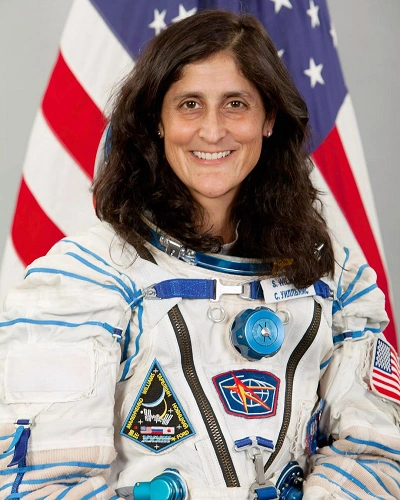
Sunita Lyn Williams was born on September 19, 1965, in Euclid, Ohio, to an Indian-American father, Dr. Deepak Pandya, and a Slovenian-American mother, Bonnie Pandya. From the very beginning, her life reflected a blend of cultures, values, and traditions; a multicultural identity that would later resonate deeply with women of color and immigrant families worldwide.
Her father immigrated to the United States from India, carrying little more than education, ambition, and hope. Her mother, with European roots, instilled discipline and resilience. Together, they raised a daughter who learned early that limitations were meant to be questioned.
Growing up, Sunita was not the stereotypical “science prodigy.” She was athletic, adventurous, and restless; traits that didn’t always align with expectations placed on girls in the 1970s and 80s. But it was precisely this combination of curiosity and courage that would later propel her into orbit.
Finding Her Calling: From the Navy to NASA
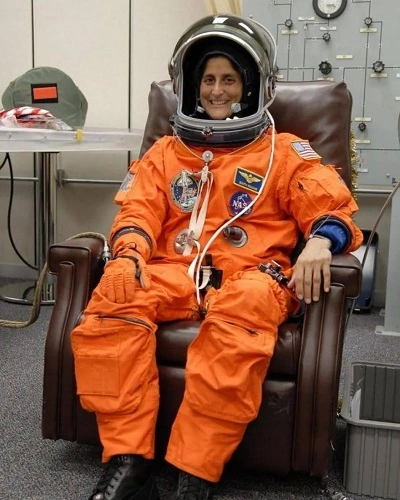
Sunita Williams’ journey to space was not linear, nor was it easy.
She graduated from the United States Naval Academy in 1987 with a degree in physical science, at a time when women were still carving out space for themselves in military institutions. She later earned a Master’s degree in Engineering Management from the Florida Institute of Technology.
As a U.S. Navy test pilot, she logged more than 3,000 flight hours in over 30 different aircraft; an achievement that already placed her among the elite long before NASA entered the picture.
In 1998, after years of flying, training, and pushing physical limits, Sunita Williams was selected as a NASA astronaut candidate. It was the beginning of a chapter that would redefine endurance, leadership, and representation in space exploration.
First Leap Beyond Earth: A Life-Changing Mission
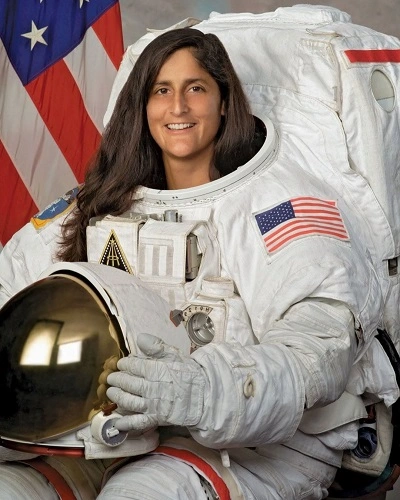
Sunita Williams first flew into space in December 2006 aboard the Space Shuttle Discovery. What was initially planned as a short mission soon turned into a record-breaking stay aboard the International Space Station (ISS).
She spent 195 days in space during that mission alone; at the time, the longest single spaceflight by a woman.
For Sunita, space wasn’t just a destination. It was a workplace.
She conducted scientific experiments, maintained station systems, and participated in spacewalks that required not just physical strength but razor-sharp focus. Floating 250 miles above Earth, she became a symbol of calm competence in an environment where even the smallest mistake could be catastrophic.
600+ Days in Space: Living Where Few Ever Will
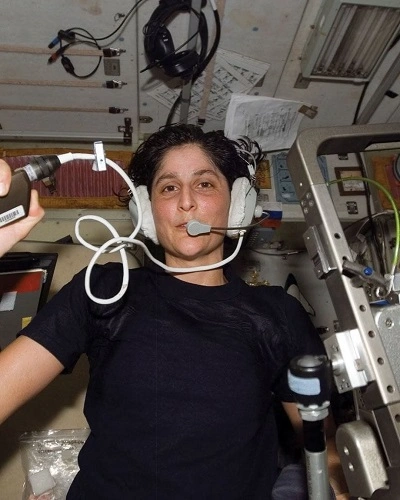
Across three ISS missions, Sunita Williams accumulated more than 600 days in space, placing her among the most experienced astronauts in human history.
Life aboard the ISS is anything but glamorous. Days are meticulously scheduled, sleep cycles are disrupted, and the human body undergoes profound changes; bone density loss, muscle atrophy, vision impairment, and psychological isolation.
Yet, Sunita thrived.
She exercised for hours daily to counteract microgravity. She adapted to eating rehydrated food. She celebrated festivals like Diwali in orbit, carrying cultural traditions beyond Earth’s atmosphere; a moment that deeply moved Indian women and girls watching from afar.
She showed the world that femininity, heritage, and scientific excellence are not mutually exclusive.
62 Hours Outside the Space Station: Defying Fear in the Void
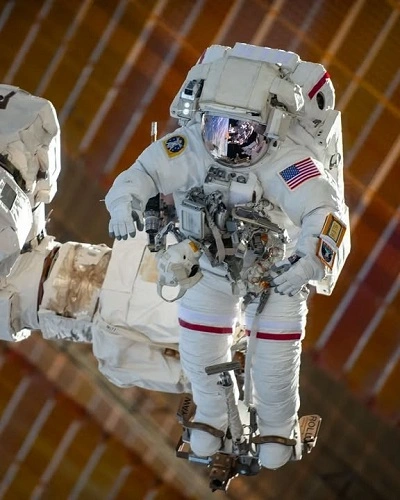
Perhaps one of the most staggering aspects of Sunita Williams’ career is her 62 hours spent on spacewalks; floating in the vacuum of space with nothing but a suit between life and death.
Each spacewalk involves immense risk. Astronauts repair critical systems, install equipment, and conduct experiments while Earth spins silently below them.
At one point, Sunita held the record for most spacewalk time by a woman; a testament not only to her technical skill but to her mental resilience.
For women everywhere, this was symbolic. It was a woman stepping into the most hostile environment known to humankind; and mastering it.
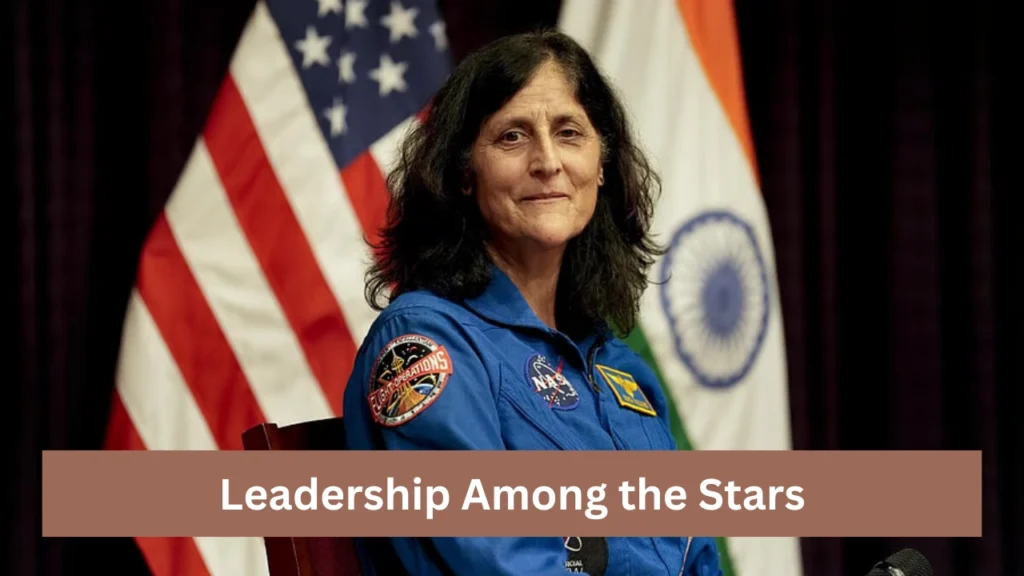
Leadership Among the Stars: Commanding the ISS
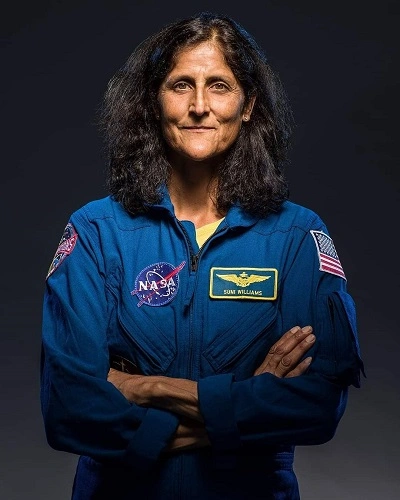
Sunita Williams didn’t just work aboard the ISS; she commanded it.
In 2012, she became the second woman ever to serve as Commander of the International Space Station. Leadership in space is different from leadership on Earth. Decisions must be precise, communication flawless, and emotional intelligence essential when a crew is confined together for months.
As commander, Sunita balanced authority with empathy. She led international crews, coordinated with mission control teams across continents, and represented the very best of global cooperation.
For women in leadership roles, her command was a powerful reminder: leadership has no gender; only responsibility.
An Indian Origin Icon: Representation That Mattered
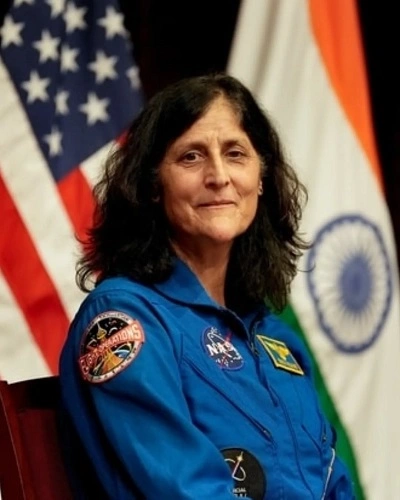
Sunita Williams’ Indian heritage played a profound role in her global influence.
In India, she became a household name; a symbol of what daughters of the diaspora could achieve. Young girls saw someone who looked like them, shared their cultural background, and yet reached heights that once seemed unimaginable.
She frequently spoke about her father’s roots, her love for Indian food, and her pride in her heritage. This visibility mattered; especially in a world where women of color are often underrepresented in STEM fields.
Her success didn’t erase her identity. It amplified it.
Retirement After 27 Years: A Quiet, Powerful Goodbye
After nearly three decades with NASA, Sunita Williams retired at the end of December 2025.
Her retirement marked the conclusion of a career defined not by headlines alone, but by sustained excellence. She didn’t chase fame. She chased precision, preparation, and purpose.
In an era obsessed with overnight success, Sunita’s story is a reminder that true greatness is built over years; mission by mission, challenge by challenge.
Why Sunita Williams’ Story Matters to Women Today
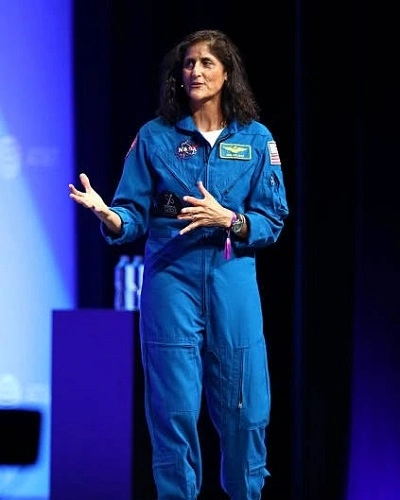
Sunita Williams’ journey is not just about space. It is about possibility.
It is about:
- Choosing ambition without apology
- Persisting in male-dominated fields
- Honoring your roots while reaching global heights
- Redefining what endurance looks like for women
Her life tells women that it’s okay to take unconventional paths, to fail, to pivot, and to aim impossibly high.
She didn’t just break records. She broke stereotypes.
Legacy She Leaves Behind
Sunita Williams leaves behind more than statistics and milestones.
She leaves behind:
- A generation of girls inspired to pursue science and engineering
- A stronger, more inclusive image of leadership
- A blueprint for balancing identity, excellence, and humility
Her footprints may not remain on the Moon or Mars; but her influence is etched deeply into the future of space exploration.
Final Thoughts
Sunita Williams may have retired from NASA, but her story is far from over.
Every woman who dares to dream beyond boundaries carries a piece of her legacy forward. Every girl who looks up at the night sky and believes she belongs there is continuing her mission.
Some people touch the sky.
Sunita Williams made it her home; and then showed the world how to lead from there.
Source: The Times of India
What’s Trending!

5 Powerful Future Queens of Europe: How Gender Equal Succession Is Transforming Modern Monarchies?

Sydney Sweeney Drives American Eagle’s Inspiring Brand Evolution in 2026: Heritage Meets Hollywood.

Margot Robbie Wore Elizabeth Taylor’s $8 Million Taj Mahal Diamond at the Wuthering Heights Premiere?
Sunita Williams: 27 Years at NASA, 600+ Days in Space, and a Legacy That Redefines What Women Can Achieve.

BLACKPINK Announces Comeback Album DEADLINE for February 27; And It Feels Like a Cultural Reset.