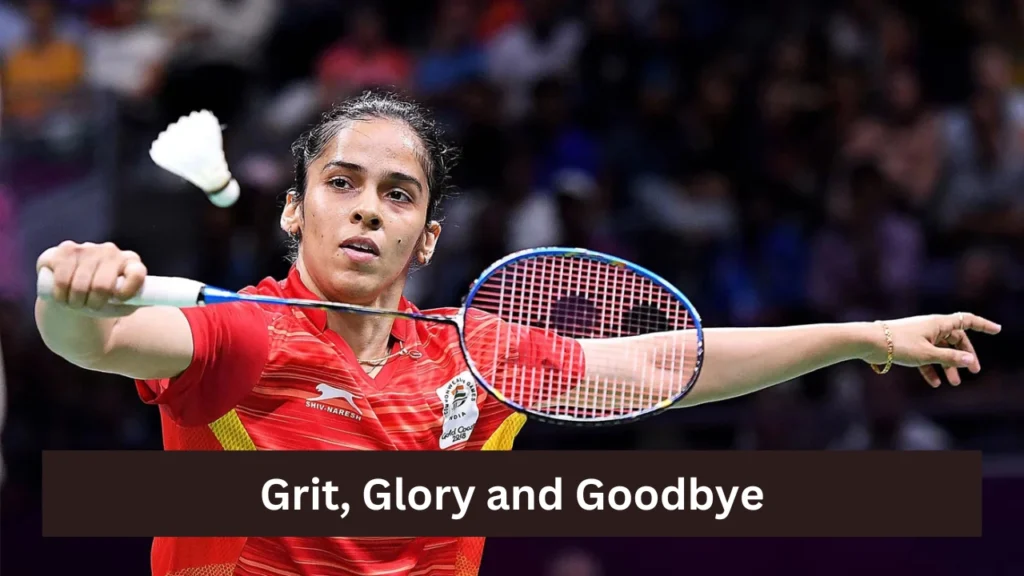
When Olympic medallist Saina Nehwal officially confirmed her retirement from competitive badminton, the news sent a wave of emotion across India and the global sporting community. For millions of women, athletes, and dreamers, this was not merely an announcement; it was the closing of a chapter that shaped Indian women’s sport in ways few careers ever have.
Saina Nehwal is not just a former world No. 1 or an Olympic bronze medallist. She is a movement. She is the reason badminton courts across India filled with young girls daring to believe that international glory was possible. Her retirement, after nearly two years away from the court due to a chronic knee condition, is a moment of reflection, gratitude, and deep respect.
Choosing Grace Over Noise: Retirement on Her Own Terms
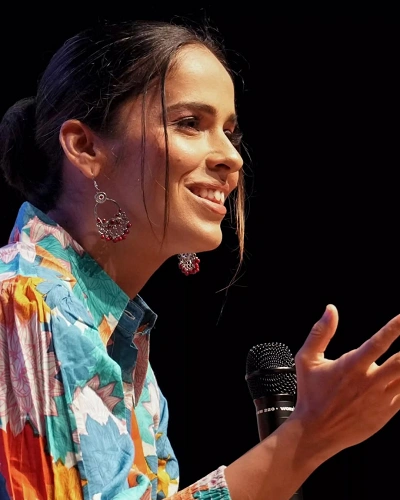
Saina Nehwal revealed that she had quietly stepped away from competitive badminton almost two years ago, with her last appearance coming at the Singapore Open in 2023. Unlike many athletes who announce their farewell with ceremonies and packed stadiums, Saina chose silence and dignity.
“I entered the sport on my own terms and left on my own terms,” she said during a podcast hosted by Subhojit Ghosh.
That single line perfectly captures her career. Saina never waited for permission, applause, or validation. She trusted her instincts, even when the decision was painful.
Her retirement was not driven by lack of motivation or love for the sport. Instead, it was forced by a harsh physical reality. Severe degeneration of cartilage in her knees and arthritis made sustained high-intensity training impossible.
Doctors made it clear that continuing at the highest level would mean constant pain and long-term damage. After discussions with her parents and coaches, Saina made the courageous choice to step away.
For women especially, this decision holds immense significance. It reflects the power of listening to one’s body, prioritizing long-term health, and understanding that strength sometimes lies in knowing when to stop.
From Hisar to the World: A Journey Built on Courage
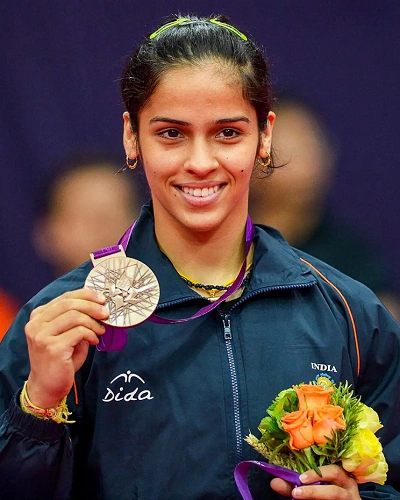
Born in Hisar, Haryana, Saina Nehwal’s rise was anything but easy. In an era when women’s sports received limited attention and resources, she dared to dream beyond expectations.
Her breakthrough came in 2008 when she won the Junior World Championship, instantly putting Indian women’s badminton on the global map. That same year, she became the first Indian woman to reach the quarter-finals of Olympic singles badminton at the Beijing Games.
Every step forward felt revolutionary because there was no established roadmap. Saina Nehwal was building it herself.
Redefining Indian Badminton on the Global Stage
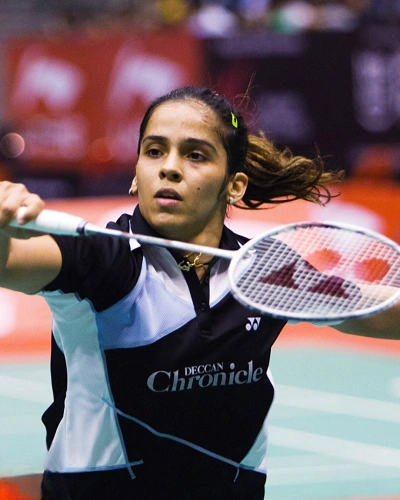
Saina Nehwal’s career is filled with historic firsts; each one a milestone not just for her, but for Indian sport.
- 2009: Became the first Indian to win a BWF Super Series title by claiming the Indonesia Open
- 2010: Won gold at the Commonwealth Games, cementing her status as a global contender
- 2012: Made history at the London Olympics by becoming India’s first-ever Olympic medallist in badminton with a bronze medal
- 2015: Achieved the world No. 1 ranking in women’s singles, becoming the first Indian woman to do so and only the second Indian after Prakash Padukone
At her peak, Saina Nehwal was known for her explosive footwork, powerful smashes, and fearless mindset. She took on the best in the world without intimidation, proving that Indian women belonged at the very top of international sport.
Battles Beyond the Scoreboard
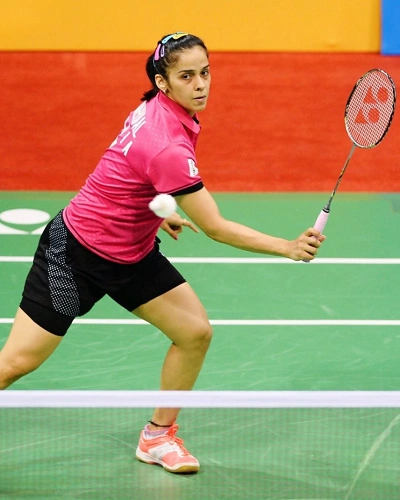
What truly sets Saina Nehwal apart is not just what she won, but what she endured.
Her career was repeatedly interrupted by injuries; ankle issues, knee surgeries, fitness setbacks, and yet she kept returning. Every comeback demanded mental toughness that few can comprehend. The pressure of being a trailblazer, carrying national expectations, and constantly proving oneself takes a heavy toll.
In a society that often expects women to quietly endure, Saina Nehwal showed that resilience could be loud, visible, and unapologetic.
A Role Model Beyond Medals
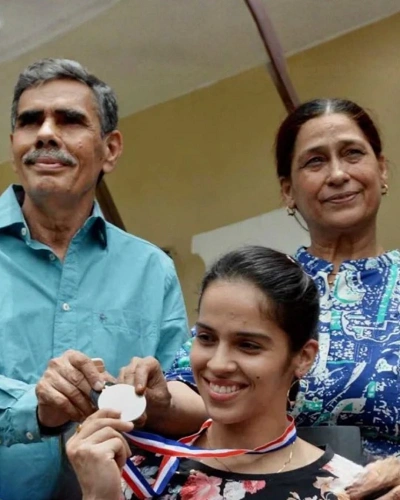
Saina Nehwal’s influence goes far beyond statistics and trophies. She changed perceptions.
Before Saina Nehwal , badminton was rarely considered a viable career option for girls in India. After Saina, parents began enrolling daughters in academies, schools invested in courts, and sponsors looked at women athletes differently.
She made it acceptable for women to be ambitious, competitive, and fiercely driven.
Her life story, captured in the biopic “Saina” released in 2021, offered a glimpse into the sacrifices behind the success; the early mornings, the relentless training, the injuries, and the mental battles.
National Recognition for a National Icon
India acknowledged Saina Nehwal ’s contribution with every major sporting honour:
- Padma Shri
- Padma Bhushan
- Rajiv Gandhi Khel Ratna
- Arjuna Award
These awards, however, only scratch the surface of her impact. Her real legacy lives in the confidence she instilled in an entire generation of women.
An Era Ends, a Legacy Begins
Saina Nehwal’s retirement officially closes a defining chapter in Indian badminton history. It marks the end of an era where she stood as the lone warrior, taking Indian women’s badminton from hopeful beginnings to global respect.
Yet, her legacy is far from over.
Every time a young girl picks up a racket believing she can win an Olympic medal, Saina lives on. Every time an Indian shuttler walks onto an international court without fear, her influence is present.
Final Thoughts
Saina Nehwal leaves behind more than medals and records. She leaves behind courage, possibility, and belief.
Her journey teaches women that success does not require perfection; only persistence. That stepping away does not mean giving up. And that choosing yourself, even at the peak of fame, is an act of strength.
As she steps into the next phase of her life, free from the demands of elite competition, she does so with dignity, pride, and the love of a grateful nation.
Thank you, Saina Nehwal, for showing us that dreams born in small towns can echo across the world; and that true champions never really retire.
Source: NDTV Sports
What’s Trending!
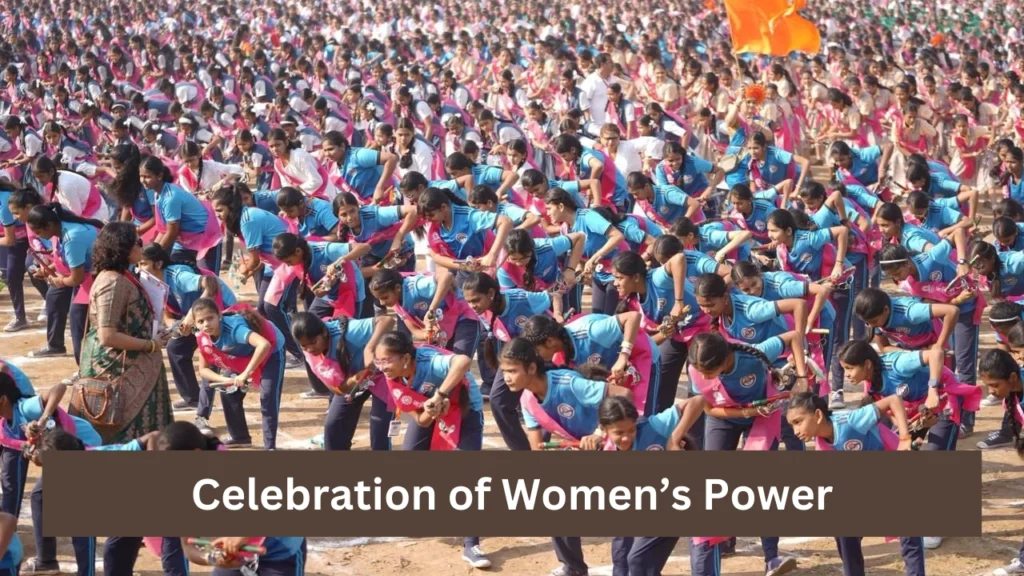
Dombivli Women Set Guinness Record with Massive Lezim Dance: Historic Celebration of Culture in 2026.
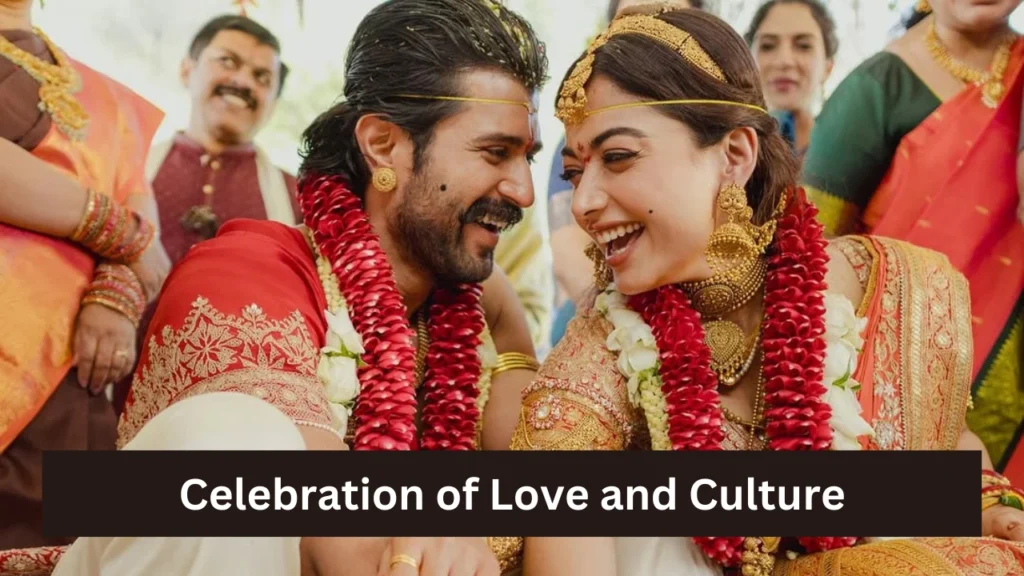
Rashmika Mandanna and Vijay Deverakonda’s Dream Wedding in 2026: Celebration of Love and Culture.
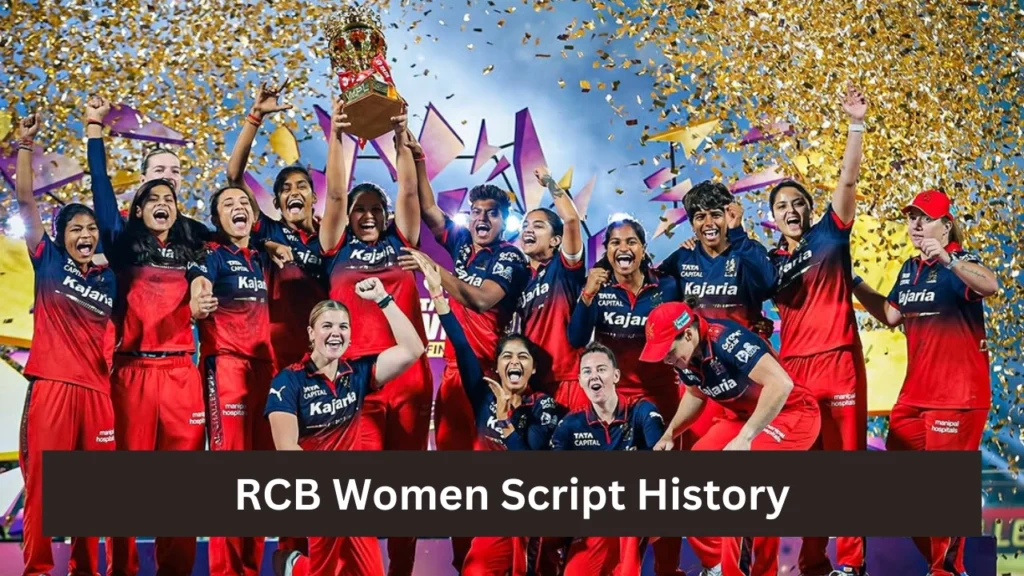
RCB Women Script History: 204 Run Chase, a Sisterhood of Fire, and a Crown That Sparkles Louder Than Ever.
Ananya Birla Is Rewriting the Script: Inside the Launch of Birla Studios and the Future of Indian Cinema.
Palki Sharma Steps Down as Firstpost Managing Editor: Bold Exit and the Future of Digital Journalism.