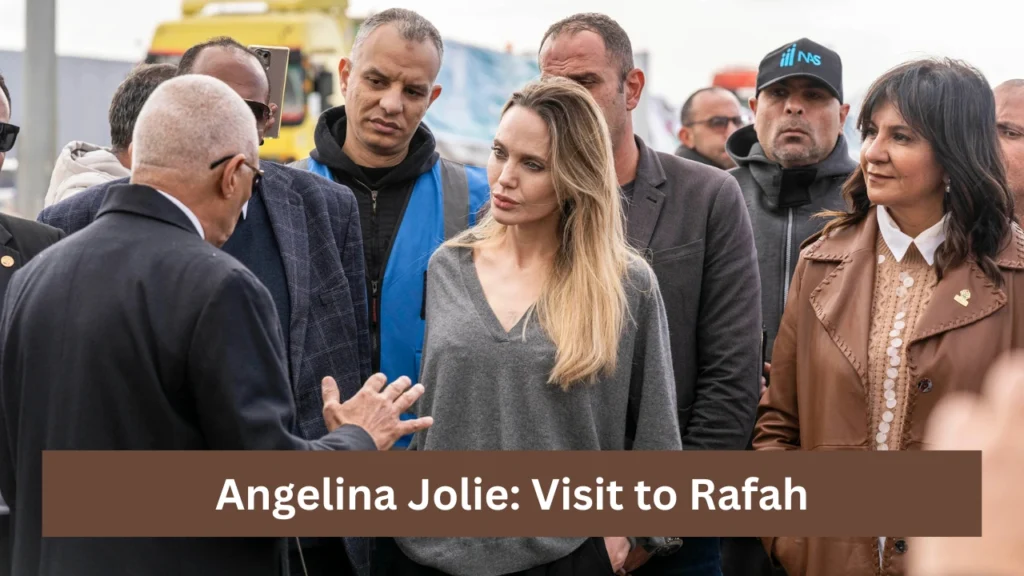
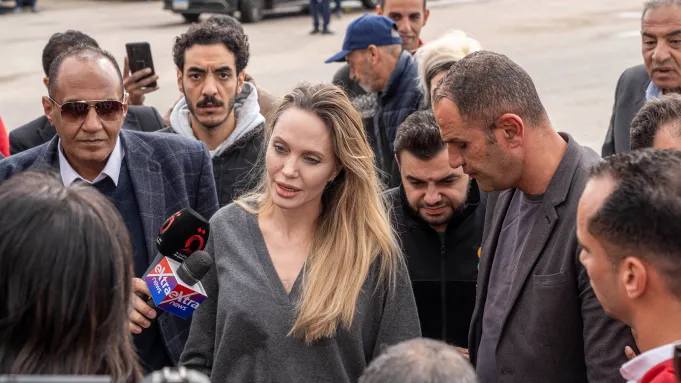
In a world overflowing with headlines that move faster than our emotions can process, Angelina Jolie continues to pause, listen, and show up. The actress, filmmaker, mother of six, and globally respected humanitarian recently visited the Egyptian side of the Rafah border crossing, the only gateway between Egypt and Gaza, a place that has become a powerful symbol of both hope and heartbreak.
Her presence at Rafah wasn’t loud. It wasn’t glamorous. And that’s precisely why it mattered.
A Border That Holds Millions of Stories
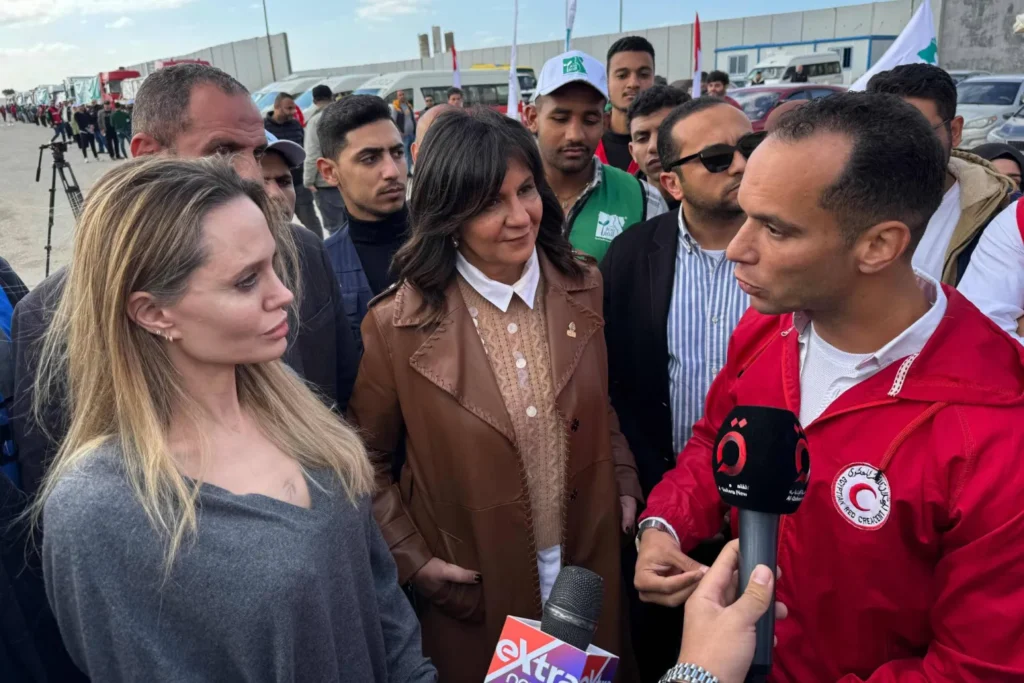
The Rafah crossing is more than a geopolitical checkpoint, it is a lifeline. For months, it has stood at the center of a growing humanitarian crisis, where trucks filled with food, clean water, medical supplies, and shelter materials wait endlessly for clearance. On one side are aid workers desperate to help; on the other are families trapped in survival mode.
Angelina Jolie walked through this space not as a celebrity, but as a witness. She observed rows of stalled aid trucks, spoke with exhausted volunteers, and listened to humanitarian workers describe the emotional toll of watching help sit idle while lives hang in the balance.
Her visit quietly amplified what many women instinctively understand: waiting can be as painful as loss itself.
Listening First, Speaking Later
Jolie’s humanitarian work has always been rooted in listening. During her visit, she spent time with Egyptian Red Crescent volunteers, medical staff, and drivers who have been stationed at Rafah for weeks, sometimes months. These men and women described the heartbreaking frustration of being ready to help but unable to cross.
She also visited nearby hospitals where injured Palestinians; including women and children, are receiving treatment after being evacuated from Gaza. Doctors shared stories of overworked wards, limited supplies, and the emotional strain of treating trauma that extends far beyond physical wounds.
For Jolie, these moments are personal. As a mother, she has often spoken about how conflict impacts children first and hardest. As a woman, she understands the invisible labor women perform during crises; caring for families, holding communities together, grieving quietly while still moving forward.
Why Women Are Paying Attention?
Angelina Jolie’s visit resonates deeply with women across cultures and backgrounds because it reflects a form of leadership many women recognize:
- Compassion without performance – showing up even when it’s uncomfortable.
- Strength through empathy – choosing care over detachment.
- Advocacy rooted in humanity – not headlines.
In a media landscape saturated with curated images and fleeting outrage, Jolie’s presence at Rafah felt different. It wasn’t about speaking for people; it was about standing with them.
Women around the world, whether mothers, caregivers, professionals, or activists, understand this instinctively. We know that real impact often happens quietly, in moments that aren’t broadcast but deeply felt.
A Visit That Sparked Global Conversation
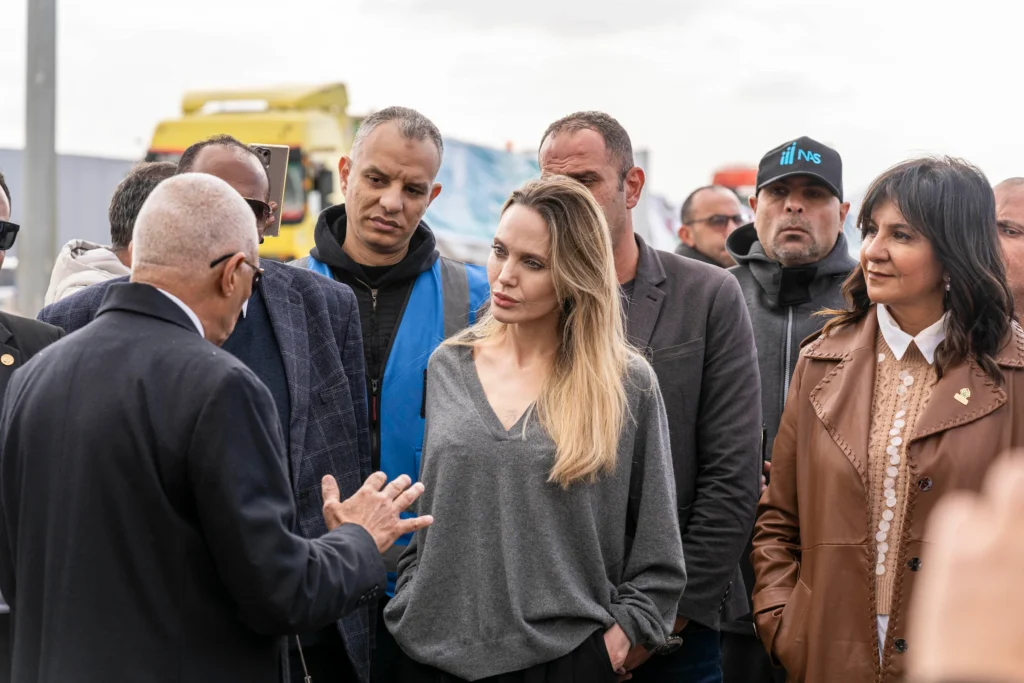
As expected, Jolie’s visit sparked a wave of global reactions. Supporters praised her for drawing attention to the humanitarian emergency and reminding the world of the human cost behind political debates. Critics argued that the situation is complex and should be addressed from multiple perspectives.
Yet, regardless of opinion, one thing is undeniable: the conversation widened.
Her presence pushed humanitarian access, civilian suffering, and the urgency of aid delivery back into public consciousness; where it belongs.
Beyond Borders, Beyond Titles
Angelina Jolie has long stepped beyond the boundaries of Hollywood labels. Over the years, she has visited refugee camps, conflict zones, and disaster-stricken regions across the globe. Rafah is another chapter in that story; one that reflects consistency rather than symbolism.
This visit also challenges a common narrative: that compassion is passive. In reality, compassion requires courage; the courage to witness suffering, to confront uncomfortable truths, and to remain present when it would be easier to look away.
What This Moment Means Going Forward?
As the humanitarian situation continues to unfold, Jolie’s visit serves as a reminder that awareness is not enough, but it is a beginning. Real change depends on sustained action, cooperation, and the willingness of global leaders to prioritize human lives.
For everyday women watching from afar, this moment invites reflection:
- How do we stay informed without becoming numb?
- How do we raise empathetic children in a fractured world?
- How do we use our voices; in our homes, workplaces, and communities, to stand for humanity?
A Quiet Call to Care
Angelina Jolie did not arrive at Rafah with answers. She arrived with presence. And sometimes, presence is the most powerful statement of all.
In a world that often rewards noise over nuance, her visit reminds us of something women have always known: care is not weakness, empathy is not naive, and showing up still matters.
And perhaps, in times like these, that message is exactly what the world needs to hear.
Final Thought
Angelina Jolie’s visit to the Rafah crossing reminds us that humanity does not begin or end with politics; it begins with people. With quiet strength and unwavering empathy, she stepped into a space defined by pain and uncertainty, not to offer solutions, but to offer presence.
In doing so, she reflected a truth many women carry in their hearts: that compassion, when practiced consistently, becomes a form of courage. As the world continues to watch unfolding events from a distance, this moment calls on all of us; especially women, to lead with care, to stay engaged, and to remember that even bearing witness is an act of solidarity.
Source: EgyptToday, South China Morning Post
What’s Trending!

5 Powerful Future Queens of Europe: How Gender Equal Succession Is Transforming Modern Monarchies?

Sydney Sweeney Drives American Eagle’s Inspiring Brand Evolution in 2026: Heritage Meets Hollywood.

Margot Robbie Wore Elizabeth Taylor’s $8 Million Taj Mahal Diamond at the Wuthering Heights Premiere?
Sunita Williams: 27 Years at NASA, 600+ Days in Space, and a Legacy That Redefines What Women Can Achieve.

BLACKPINK Announces Comeback Album DEADLINE for February 27; And It Feels Like a Cultural Reset.