
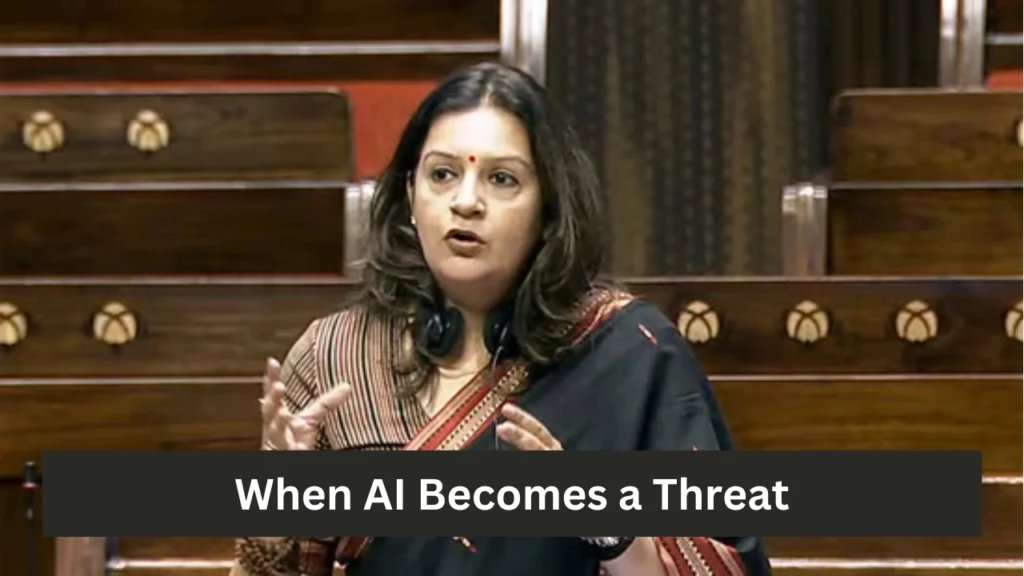
AI Becomes a Threat?
As artificial intelligence rapidly becomes part of our everyday lives, a disturbing question is emerging louder than ever: Who protects women when technology is misused against them? This question has taken centre stage after Shiv Sena (UBT) Rajya Sabha MP Priyanka Chaturvedi wrote a strongly worded letter to Union Minister for Electronics and Information Technology Ashwini Vaishnaw, raising alarm over the misuse of AI tools on social media platform X.
Her intervention has struck a chord with women across the country, because the issue at hand is not abstract or futuristic; it is already happening, and women are paying the price.
The Alarming Trend on Platform X
Priyanka Chaturvedi highlighted a deeply troubling pattern on X, where men are allegedly creating fake and anonymous accounts to misuse the AI chatbot Grok. These users upload photographs of women; often taken from their social media profiles, and use AI prompts to sexualise, alter, or generate explicit versions of these images.
What makes this abuse particularly dangerous is its accessibility. Women do not need to be public figures, influencers, or celebrities to be targeted. Any woman who has shared a photograph online; whether a selfie, a work photo, or a casual post, can become a victim.
Chaturvedi called this trend “unacceptable”, stressing that AI tools are being deliberately manipulated to violate women’s dignity, privacy, and sense of safety.
Why This Is Not “Just Online Fun”
For far too long, digital abuse against women has been dismissed as trolling, humour, or harmless mischief. But AI-driven sexualisation is far more invasive and damaging.
When a woman’s image is altered or sexualised without her consent:
- Her bodily autonomy is violated
- Her reputation can be permanently harmed
- She may face harassment, blackmail, or social stigma
- The emotional toll can include anxiety, fear, and withdrawal from online spaces
What is particularly chilling is that AI makes this abuse scalable and fast. One image can be manipulated, shared, and reshaped endlessly; long after the woman has tried to report or remove it.
A Gendered Digital Crisis
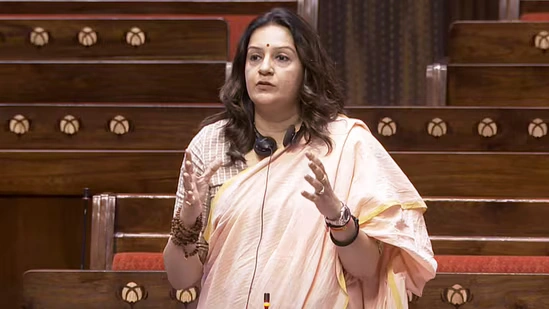
Priyanka Chaturvedi’s letter makes it clear that this is not a neutral technology issue; it is a gendered one. Women have always borne the brunt of online abuse, and AI is now amplifying existing misogyny.
Instead of being tools of empowerment, AI systems are being used to:
- Objectify women’s bodies
- Reinforce sexist fantasies
- Silence women by making online spaces hostile
The message such misuse sends is dangerous: that women’s images are public property, open to manipulation and violation.
Demand for Accountability and Urgent Action
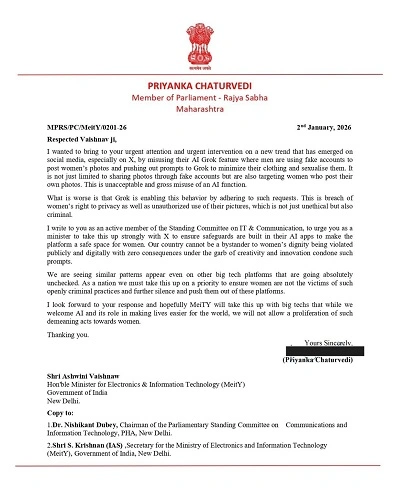
Writing in her capacity as a member of the Parliamentary Standing Committee on Information Technology and Communications, Chaturvedi urged the government to act decisively. She emphasized that platforms offering AI tools cannot escape responsibility by hiding behind innovation.
Her demands include:
- Immediate intervention to prevent the misuse of AI tools like Grok
- Stricter oversight and safeguards built into AI systems
- Clear accountability for platforms that allow such abuse to continue
- Recognition that AI-generated sexualisation of women constitutes a serious violation of rights
She warned that if action is not taken now, such misuse could spread rapidly across platforms, normalising digital violence against women.
Bigger Question: Ethics in the Age of AI
This controversy has opened up a much larger conversation about ethics, consent, and control in artificial intelligence. Technology does not exist in a vacuum; it reflects the values of the society that builds and uses it.
Without firm ethical boundaries:
- AI can become a tool for harassment rather than progress
- Innovation can come at the cost of human dignity
- Women can be pushed out of digital spaces altogether
Experts argue that consent must be central to AI use, especially when it involves human images. If a woman has not agreed to have her photo altered, analysed, or sexualised, such actions should be treated as violations; not loopholes.
Why This Matters to Every Woman Online?
You don’t have to be politically active to care about this issue. If you:
- Use social media
- Share photos with friends or colleagues
- Exist online as a woman
Then this conversation directly affects you.
The fear that your image could be misused discourages self-expression, creativity, and participation. Over time, it forces women to self-censor, while abusers operate freely behind anonymity and algorithms.
What Can Women Do Until Systems Catch Up?
While policy changes may take time, awareness is a powerful first step. Women are encouraged to:
- Report fake accounts and AI-generated abuse immediately
- Document instances of misuse
- Support conversations around digital consent and safety
- Amplify voices calling for stronger tech regulation
Solidarity matters. The more visible this issue becomes, the harder it is to ignore.
A Defining Moment for Digital India
Priyanka Chaturvedi’s letter is not just a political act; it is a statement of resistance. It challenges the idea that women must simply adapt to unsafe digital environments. Instead, it demands that technology adapt to respect women.
As India positions itself as a global technology leader, the question remains:
Will progress include women’s safety and dignity, or leave them vulnerable in the shadows of innovation?
This moment could define how seriously we take women’s rights in the digital age. And as women, it reminds us that the fight for safety does not end offline; it continues on our screens, in our feeds, and within the algorithms shaping our world.
Final Thoughts
The misuse of AI to sexualise women’s images is not a distant threat; it is happening now, and it affects millions of women navigating digital spaces every day. While technology promises empowerment, it also has the power to harm when ethics, accountability, and consent are ignored.
Priyanka Chaturvedi’s stand reminds us that digital safety is a women’s rights issue. Protecting women online is not optional; it is essential for a fair, just, and inclusive society.
Every woman deserves to exist online without fear, harassment, or violation. And every society that values equality must ensure that innovation never comes at the cost of dignity. The fight to reclaim safe digital spaces is ongoing, and awareness, advocacy, and action are the tools we must wield; together.
Source: India Today NE, The Times of India
What’s Trending!

Ananya Panday’s Fringe Era Is Here: The Soft Bangs That Are Redefining Her Fashion and Breaking the Internet.
Chiraiya: Story That Asks the Question Many Homes Still Avoid: What Does Consent Mean Inside Marriage?
Dombivli Women Set Guinness Record with Massive Lezim Dance: Historic Celebration of Culture in 2026.

Rashmika Mandanna and Vijay Deverakonda’s Dream Wedding in 2026: Celebration of Love and Culture.

RCB Women Script History: 204 Run Chase, a Sisterhood of Fire, and a Crown That Sparkles Louder Than Ever.